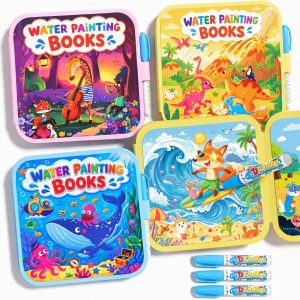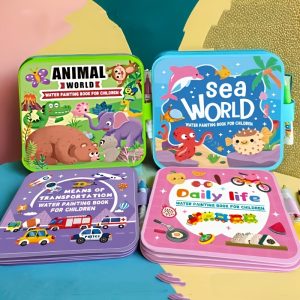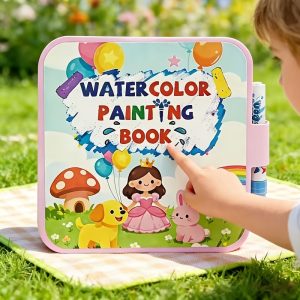

If you’ve ever watched a toddler drag a magnetic pen across a screen and squeal at the picture appearing out of nowhere,you already know why these boards are one of the most-gifted toys in the “mess-free activity” category.The short answer:Yes, magnetic drawing boards are generally safe for children when they are properly designed, age-appropriate, and used as intended.
Below, we break down exactly what’s inside these boards,which risks are real versus overstated,how to read an age label correctly, and what to do in the rare event something goes wrong.
How a Magnetic Drawing Board Actually Works
Underneath the screen sits a thin, honeycomb-shaped panel made of tiny sealed cells.each cell is filled with a thick, viscous liquid and extremely fine magnetic particles.when the magnetic pen touches the surface, it pulls those particles up through the liquid to draw a line.
Two things matter here from a safety standpoint:
- The liquid and particles are meant to stay sealed inside a rigid plastic shell for the toy’s entire life.
- The particles are inert once suspended in that liquid. They’re not loose magnets a child can pick up the actual “loose magnet” risk comes from a completely different part of the toy: the pen and any add-on stamps.
This is why almost every credible safety issue with these toys traces back to accessories, not the drawing panel itself.
What’s Inside a Magnetic Drawing Board-And Is the Liquid Toxic?
The internal liquid is typically water-, glycol-, or oil-based, thickened with wax or fatty-acid compounds so the magnetic particles stay suspended instead of settling to the bottom.the particles themselves are usually magnetite or a similar iron-oxide compound, sometimes mixed with a white pigment for contrast.
Should that worry you? In a toy that’s manufactured to meet U.S. or EU toy-safety requirement, this liquid is formulated to be non-toxic in the sense that it’s not designed to poison a child on brief skin contact,it’s the same category of “safe but not edible” as many household items.
What to actually do:
- If the board is undamaged,there’s no exposure risk at all.
- If you notice a crack, dent,or the screen feels soft or leaking,stop use immediately and keep it away from kids.
- If a child does get the liquid on their skin, wash it off with soap and water.If it’s ingested, contact Poison Control (in the U.S., 1-800-222-1222) or your local equivalent.
The Real Risks
None of the risks below are unique to magnetic drawing boards,they’re the same categories the CPSC (Consumer Product Safety Commission) flags across small-parts toys generally.
1. The Magnetic Pen Tip
This is the single most common real-world hazard. The stylus has a small magnet embedded in the tip so it can “draw.” If a child chews on the pen a poorly secured tip can dislodge.this is exactly the defect behind a documented U.S. recall: the CPSC recalled a line of magnetic sketchboards after finding that the magnetic tip of the drawing pen could work itself loose,creating a choking hazard for children.
2. Magnetic Stamps and Beads
Add-on accessories are a step up in play value but a step down in safety margin for younger toddlers.these pieces are small, detachable, and specifically designed to be handled and repositioned, which is exactly the profile of a choking hazard for a child under 3.
3. Two Magnets Together Is a Different, More Serious Risk
Swallowing one small magnet is usually a choking or minor GI-passage concern. Swallowing two or more separate magnets is a more urgent situation,because they can attract each other through loops of intestine from opposite sides, pinching the tissue between them and causing internal injury.
4. Frame Durability and Sharp Edges
Cheaper plastic frames can crack under a toddler’s inevitable drops and throws,exposing sharp edges or internal components.a board advertised as “shock-resistant” or with rounded, reinforced corners is a meaningfully safer choice for kids under 4, not just a marketing line.
5. Battery-Powered LCD Versions
Some drawing boards use a small coin/button battery to power the screen.If your child’s board includes one, check that the battery compartment is screw-secured, not just a snap-open panel.
Are Magnetic Drawing Boards Safe for Toddlers? An Age-by-Age Breakdown
Here how to match the product to the age realistically, not just by the sticker on the box.
| Age Range | What’s Generally Appropriate | What to Avoid |
|---|---|---|
| 12–24 months | Large, chunky, single-piece basic doodle boards with no detachable stamps; short, thick, tethered pen | Bead boards, stamp sets, small accessories, LCD models with removable batteries |
| 2–3 years | Basic and mid-size doodle boards; tethered pen with a securely fused magnetic tip | Loose or poorly reviewed stamp sets; anything with visibly wobbly or peeling parts |
| 3+ years | Bead boards, magnetic stamp boards, letter/number magnet sets, LCD pressure-sensitive tablets | Boards with any visible manufacturing defects |
| 5+ years | Larger detailed boards, multi-color LCD tablets, more complex stamp/design sets | N/A |
Why they’re generally safe:
- No ink, paint, chalk dust, or crayon wax
- No sharp points like traditional pencils or crayons can have
- Reusable design means no small pieces from broken crayons/markers
- The magnetic stylus is typically blunt and rounded
The single most reliable rule across all ages: the manufacturer’s stated age range exists because of small-parts testing, not marketing.
Safety Certifications to Look For Before You Buy
Look for these on the packaging or product listing:
- ASTM F963 (United States)-the toy safety standard covering choking hazards, magnet strength/flux limits, and material toxicity.
- CPSIA compliance (United States)-confirms lead and phthalate limits are met for children’s products.
- EN71 (European Union)-the equivalent European toy safety standard, also covering small parts and magnetic flux index.
- CE marking– indicates the product meets EU safety, health, and environmental requirements.
- CPSIA Tracking Label-a permanent marking with manufacturer, batch, and date info, required on U.S. children’s products; useful if you ever need to check a product against a recall.
Comparing Board Types by Safety Profile
| Board Type | Small-Parts Risk | Best Minimum Age | Notes |
|---|---|---|---|
| Basic single-color doodle board | Low | 12 months | Fewest detachable parts; safest starter option |
| Multi-color-zone doodle board | Low | 18 months | Same mechanism, more visual variety |
| Board with tethered stamps | Medium | 3 years | Stamps can still detach with rough play |
| Bead/pin-art board | Medium–High | 3 years | Loose beads are the main hazard if the housing cracks |
| LCD pressure-sensitive tablet | Low (mechanical) / Medium (battery) | 3 years | Check battery compartment security separately |
How to Check if a Specific Board Has Been Recalled
Because build quality varies so much by manufacturer,it’s worth a 60-second check before or after a purchase:
- Go to cpsc.gov/recalls (U.S.) and search “magnetic drawing board” or “sketchboard.”
- Cross-check the model number and manufacturer printed on your product’s tracking label against any listed recall.
- If you’re outside the U.S.,check your national equivalent.
- If a match comes up, stop use immediately and follow the manufacturer replacement or refund instructions listed in the recall notice.
What to Do If Your Child Swallows a Magnet or Pen Tip
- If you suspect your child swallowed one magnet or a single small part: Contact your pediatrician or Poison Control right away. Don’t wait for symptoms.
- If you suspect they swallowed two or more magnets,or a magnet plus any other metal object: Treat this as an emergency.
- Watch for warning signs in the hours after any suspected ingestion: vomiting, abdominal pain, fever, or refusal to eat.
- Don’t attempt to induce vomiting unless a medical professional specifically instructs you to.
Why Magnetic Boards Are Genuinely Good for Toddlers
- Fine motor development:gripping the pen and controlling small movements builds the same muscles needed for handwriting later.
- Hand-eye coordination:connecting what the hand does to what appears on screen is a foundational cognitive skill.
- Cause-and-effect learning:for toddlers especially, “I do this, that happens” is a core developmental milestone.
- Sensory and communication support:the tactile, high-contrast, low-mess nature of these boards makes them a frequently recommended tool for kids with sensory processing needs or autism,since they offer visual and tactile feedback without the frustration of paint or the fine-motor demand of crayons.
- Screen-free engagement :genuine open-ended creativity without a display, app, or battery drain.
Safety Checklist
- Does the age label match your child’s actual stage?
- Is the pen tip permanently fused into the stylus, not glued or press-fit?
- Is the pen attached to the board with a secure, appropriately-sized tether?
- Are stamps or beads too large to fit through a standard choke-test tube?
- Does the listing reference ASTM F963, CPSIA, EN71, or CE compliance?
- Is the frame free of sharp seams, and does it feel solid rather than flexible or hollow when pressed?
- If it’s battery-powered, is the compartment screw-secured rather than snap-open?
- Have you checked the model against current CPSC or Safety Gate recall listings?
FAQ
Are magnetic drawing boards safe for toddlers?
Yes, for toddlers roughly 12 months and older, provided you choose a basic model without small detachable stamps or beads, the pen tip is securely fused, and the product meets a recognized safety standard (ASTM F963, CPSIA, or EN71).
Is the liquid inside a magnetic drawing board toxic?
It’s formulated to meet non-toxic requirements for children’s toys and poses no risk as long as the board stays sealed and intact.
What’s inside a magnetic drawing board?
A sealed honeycomb panel filled with a thick, glycol- or water-based liquid and fine magnetic particles. A magnetic pen pulls the particles to the surface to draw, and a sliding magnet on the eraser bar pulls them back to clear the screen.
What age is a magnetic drawing board for?
Basic single-piece models are generally appropriate from around 12 months. Versions with detachable stamps, magnetic beads, or small accessory pieces are typically rated 3 years and up because of choking-hazard testing on those smaller parts.
What is the best magnetic drawing board?
The “best” board depends on your child’s age more than any single brand.
Why are magnetic boards good for toddlers?
They build fine motor control and hand-eye coordination, offer immediate cause-and-effect feedback, and provide open-ended, mess-free creative play, app, or the frustration threshold of holding a crayon or paintbrush.
Summarize:
Magnetic drawing boards are one of the safer, more durable toy categories available for toddlers and preschoolers,when the board is age-matched, meets recognized safety standards, and its small parts are inspected regularly for wear.